
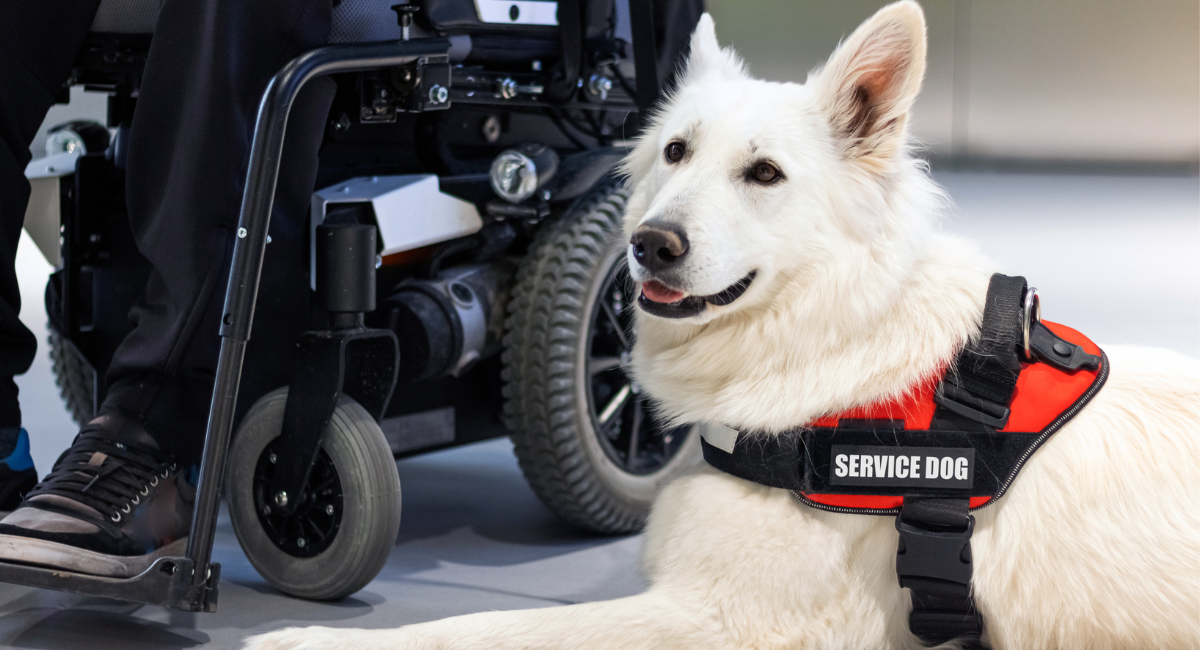
You’re walking through a grocery store when you spot a beautiful golden retriever in a vest beside someone browsing the produce section.
Your first instinct might be to smile at the dog, call out a friendly greeting, or ask if you can pet them.
But if that dog is a service dog, those well-intentioned actions could actually put someone’s safety at risk.
Service dog etiquette isn’t just about being polite—it’s about understanding how your behavior affects working assistance dog teams and respecting the critical bond between a service dog and their human partner.
Most people genuinely want to do the right thing around service dogs but simply don’t know what proper etiquette looks like.
This guide explains everything the general public needs to know about interacting (or not interacting) with service dogs in public spaces.
Legal Definition of a Service Dog Under the ADA
Before diving into etiquette rules, it’s essential to understand what actually qualifies as a service dog under federal law.
The Americans with Disabilities Act defines a service animal as a dog that has been individually trained to perform work or a specific task for a person with a disability. This definition is more precise than many people realize.
The task performed must directly relate to the handler’s disability. For example, a guide dog helps someone who is blind navigate safely.
A service dog might alert someone with diabetes to dangerous blood sugar levels. Another might provide stability support for someone with mobility challenges.
These animals undergo extensive training to perform their duties reliably, even in distracting or chaotic environments. They’re essentially medical equipment with fur and a heartbeat.
You Might Also Like…
Service Animal, ESA & Pet Laws: What You Can Bring to Restaurants
How Service Dogs Differ from Pets & Emotional Support Animals
Here’s where confusion often arises. A service dog is not the same as a pet or an emotional support animal, even though all three might be dogs.
Pets provide companionship but have no special access rights to public places. An assistance animal or emotional support animal may provide comfort but isn’t trained to perform specific tasks.
Under the Fair Housing Act and Air Carrier Access Act, emotional support animals have certain protections for housing and air travel, but they don’t have the same public access rights as service dogs.
A working service dog has undergone rigorous training and has legal access to virtually all public spaces where their handler goes.
The distinction matters because it determines where dogs can legally accompany their owner and how they should be treated.
Why Service Dog Etiquette Matters
Understanding proper etiquette around service dogs isn’t about following arbitrary social rules. It’s about safety, independence, and respect for people with disabilities.
The Impact of Distractions on Working Dogs
When a service dog is wearing their vest and accompanying their handler, they’re actively working. Their focus must remain on their person, watching for signs they need to perform their task.
Even a brief distraction can have serious consequences. If someone calls out to the dog or makes eye contact, the dog’s attention shifts away from their handler.
In those seconds, the handler might miss a step, experience a medical emergency without warning, or lose the support they depend on.
Think of it this way: you wouldn’t tap on a surgeon’s shoulder during an operation or shout to distract a pilot during landing.
A working service dog deserves the same professional courtesy because lives can depend on their focused attention.
Distractions are the ultimate distraction for these highly trained animals. What seems like harmless friendliness to you could compromise someone’s independence or safety.
Supporting Handler Independence and Safety
Service dog handlers rely on their dogs to navigate the world safely and independently. These partnerships represent freedom—the ability to shop, work, travel, and live without constant human assistance.
When the public respects service dog etiquette, handlers can move through their day with confidence.
When people ignore these guidelines, handlers must constantly manage unwanted interactions, educate strangers, and worry about their dog’s focus being compromised.
The goal of proper etiquette is simple: allow the service dog team to go about their business without interference. This respect enables handlers to live fuller, more independent lives.
The Essential Do’s of Service Dog Etiquette
Let’s start with what you should do when you encounter a service dog in public. These guidelines apply whether you’re in a restaurant, store, workplace, or any other public place.
Do Ignore the Service Dog
This feels counterintuitive, especially for dog lovers. But the single most important rule of service dog etiquette is to pretend the dog isn’t there.
Don’t make eye contact with the dog. Don’t talk to them, even to say how beautiful or well-behaved they are. Don’t make kissing noises, click your tongue, or use baby talk. Simply act as if the service dog is invisible and continue with your activities.
This doesn’t mean you should ignore the handler. You can absolutely have a normal conversation with a person who happens to have a service dog. Just direct your attention to the human, not their four-legged partner.
Do Give the Service Dog Team Space
In crowded environments, make an effort to give the handler and dog adequate room to move. Don’t crowd them in checkout lines or squeeze past them in narrow aisles.
If you’re seated near a service dog team in a restaurant or theater, resist the urge to reach down toward the dog. Give them a buffer zone just as you would respect anyone’s personal space.
Business owners and patrons alike should ensure service dog teams can navigate facilities comfortably. This might mean stepping aside to let them pass or not blocking pathways with carts or merchandise.
Do Treat the Handler with Respect
The person with the service dog is simply going about their day. Treat them with the same courtesy and respect you’d extend to anyone else.
Don’t stare at the handler or their dog. Avoid making assumptions about their disability—remember that not all disabilities are visible. Many conditions that require service dog assistance aren’t apparent to observers.
If you work in customer service, address the handler directly rather than speaking to their companion or the dog. Process their transaction, seat them at their table, or help them find products just as you would any other customer.
Do Follow Business Owner Responsibilities
If you’re a business owner or manager, understanding your obligations under ada requirements is crucial. Federal law requires businesses that serve the public to allow service dogs to accompany their handlers.
You cannot deny access based on breed, size, or personal discomfort with dogs. Service dogs must be permitted in all areas where the public is allowed, including restaurants, grocery stores, hotels, and retail establishments.
You may ask only two questions when it’s not obvious what service the dog provides: Is the dog required because of a disability? What work or task has the dog been trained to perform?
You cannot ask about the person’s disability, request documentation, or demand that the dog demonstrate their task.
Critical Don’ts Around Service Dogs
Now let’s cover what you should never do around a working service dog team. These actions might seem harmless but can significantly impact the dog’s ability to do their job.
Don’t Touch, Pet, or Make Eye Contact with the Dog
This is the golden rule. Never touch a service dog without explicit permission from the handler—and generally, permission won’t be given while the dog is working.
Reaching out to pet a service dog, even briefly, breaks their concentration. It teaches them that strangers might offer affection, making them more likely to seek attention when they should be focused on their handler.
Even making prolonged eye contact with a service dog can distract them. Dogs naturally respond to human gaze and attention. Keep your eyes on your own business, not on the working dog.
Don’t Offer Food or Treats
Many service dogs are on strict diets for health reasons. Some handlers use food as part of their dog’s reward system and training. Offering treats interferes with this carefully managed system.
Additionally, giving food to a service dog teaches them to solicit food from strangers—exactly what they shouldn’t do while working.
If they’re watching for dropped treats instead of monitoring their handler, they can’t perform their task effectively.
Even if you think you’re being kind, offering food to any working service dog is inappropriate. This applies whether you’re a restaurant patron sitting near the dog or someone passing by on the street.
Don’t Ask Intrusive Questions About the Handler’s Disability
Curiosity is natural, but a person’s medical history is private information. Under the Americans with Disabilities Act, people with service dogs aren’t required to disclose details about their condition.
Questions like “What’s wrong with you?” or “Why do you need that dog?” are invasive and rude. The handlers disability is none of your business unless they choose to share that information.
Even well-meaning questions like “Does your dog help with your blindness?” when the person doesn’t appear blind can be hurtful.
Not all disabilities are visible, and handlers shouldn’t have to defend or explain their needs to strangers.
Don’t Distract the Working Dog with Noises or Gestures
Beyond direct interaction, avoid any behavior that might catch the dog’s attention. This includes whistling, clapping, making animal sounds, or waving your hands near the dog.
If you have a pet with you, keep them under control and at a distance from service dog teams. Your pet might want to play or investigate, but even friendly approaches can distract a working service dog from their duties.
Parents should teach children these same principles. Kids often get excited seeing dogs and may not understand why they can’t pet this particular one.
A simple explanation about “working dogs” can help them understand the don’ts of service dog interaction.
What to Do If You Need to Interact with a Handler
Sometimes interaction with a service dog handler is necessary or appropriate. Here’s how to handle those situations respectfully.
Appropriate Questions Under ADA Requirements
If you’re a business owner or employee, you’re allowed to ask two specific questions if someone’s disability and their service animal aren’t obvious:
First: “Is the dog a service animal required because of a disability?” This is a yes-or-no question.
Second: “What work or task has the dog been trained to perform?” The handler can answer generally without revealing private medical information.
You cannot ask what the person’s disability is. You cannot request special identification, documentation, or certification for the service dog. You cannot ask the dog to demonstrate their task.
These questions violate the handler’s rights under federal law.
When Permission Is Required (and When It’s Not)
In most situations, you don’t need permission from a handler to go about your normal activities. You can walk past them, shop in the same store, or sit near them without asking.
However, if you need to do something that directly affects the service dog team—like moving their chair at a restaurant or squeezing past in a tight space—a polite “excuse me” to the handler is appropriate. Direct your communication to the person, not the dog.
If you’re genuinely curious about service dogs and want to learn more, consider whether this is the right time and place. A handler in line at the DMV probably isn’t interested in an educational conversation.
If you do ask a question about their dog, accept a brief answer or a polite decline gracefully.
Service Dog Rights in Public Spaces
Understanding where service dogs can and cannot go helps both handlers and the public navigate shared spaces appropriately.
Access Rights Under Federal Law
Under the Americans with Disabilities Act, service dogs can accompany their handlers virtually anywhere the public is allowed.
This includes restaurants, stores, hotels, theaters, museums, and government buildings.
State and local health codes cannot prohibit service dogs from restaurants or food preparation areas. Religious institutions may have their own policies, but most public accommodations must allow access.
The only times a service dog can be legally excluded are if the dog is out of control and the handler doesn’t take effective action to control them, or if the dog isn’t housebroken.
Barking occasionally, growling, or one-time incidents typically don’t meet the threshold for removal.
You Might Also Like: Dog Cafes vs. Dog-Friendly Restaurants
Fair Housing Act and Air Carrier Access Act Protections
Different laws apply to housing and air travel. The Fair Housing Act requires landlords to make reasonable accommodations for tenants with service dogs, even in “no pets” properties.
For air travel, the Air Carrier Access Act has specific requirements. As of recent updates, only dogs qualify as service animals for air travel.
Airlines can require specific documentation and advance notice, unlike the on-the-spot access required in most public places.
These distinctions matter because a dog owner might face different requirements depending on the context—shopping versus housing versus flying.
What Business Owners and Patrons Should Know
Business owners must allow service dogs but can set some reasonable expectations. The dog must be under the handler’s control, typically via leash, harness, or tether (unless these devices interfere with the dog’s work or the person’s disability prevents their use).
The handler is responsible for any damage their dog causes. If a service dog is being disruptive—barking continuously, jumping on people, or toileting indoors—the business can ask the handler to remove the dog.
Other patrons should understand that a service dog’s presence is a civil right, not a courtesy. If you’re uncomfortable around dogs, the appropriate response is to seat yourself elsewhere, not to demand the service dog team be moved or removed.
You Might Also Like…
The Complete Guide to Dog-Friendly Restaurant Etiquette
Common Misconceptions About Service Dogs
Several myths about service dogs persist despite clear legal guidelines. Let’s address the most common misunderstandings.
“All Service Dogs Wear Vests” – False
Many service dogs do wear vests, patches, or special harnesses to identify them as working dogs. However, no federal law requires service dogs to wear any identifying gear.
A dog without a vest can still be a legitimate service dog. Conversely, anyone can buy a vest online and put it on their pet—the vest itself proves nothing about whether a dog is truly trained for service work.
The presence or absence of a vest doesn’t change how you should behave around a dog accompanying someone. If in doubt, treat the dog as if they’re working.
“I Can Ask for Documentation” – What the Law Actually Says
There is no official certification, registration, or documentation required for service dogs under the Americans with Disabilities Act.
Any websites selling “service dog registration” or “certification” are not government-sanctioned or legally meaningful.
Businesses cannot demand to see papers, identification cards, or proof that a dog is a service animal. The two questions mentioned earlier are the only inquiries permitted.
This system operates on trust and honesty. While some people unfortunately misrepresent their pets as service dogs, the law protects individuals with legitimate disabilities from having to carry documentation or prove their needs.
Service vs. Assistance Animals
The terms get confusing, but here’s a simple breakdown. A service dog is specifically trained to perform tasks related to a disability and has public access rights.
An assistance dog is often used interchangeably with service dog in casual conversation. Guide dogs are a type of service dog specifically trained for individuals who are blind or have low vision.
An emotional support or comfort animal provides therapeutic benefit through companionship but isn’t trained for specific tasks.
These animals have housing and air travel protections under different laws but don’t have the same public access rights as service dogs.
When people discuss proper etiquette and public access, they’re typically referring to task-trained service dogs covered under ADA regulations.
Educating Others About Proper Etiquette
Knowledge about service dog etiquette spreads through education and leading by example. Here’s how you can help create a more respectful environment for service dog teams.
Teaching Children to Respect Working Service Dog Teams
Kids are naturally drawn to dogs and may not understand why they can’t pet every dog they see. Use these encounters as teaching opportunities.
Explain that some dogs have important jobs keeping their person safe. Compare it to not interrupting when someone is doing important work.
Praise your child for noticing the dog but choosing not to disturb them.
Model appropriate behavior yourself. When your child asks loudly about petting a service dog, redirect them quietly and move on without making a scene.
Children learn more from what you do than what you say.
If your child has already approached or distracted a service dog, apologize briefly to the handler and use it as a learning moment afterward.
Don’t over-apologize or create a lengthy disruption—a quick acknowledgment and correction is sufficient.
Creating Awareness in Public Places
If you witness someone violating service dog etiquette—calling to a dog, trying to pet them, or taking photos without permission—consider whether gentle education might help.
Sometimes a quiet word can make a difference: “I think that’s a working service dog—they need to focus on their handler.” Keep it brief and non-confrontational. The goal is education, not embarrassment.
Businesses and organizations can post simple signage reminding individuals not to pet or distract service dogs. Even a small visual reminder can prompt people to think before they act.
Share information on social media, in community groups, or with friends when the topic arises naturally. Many people simply don’t know the proper etiquette until someone explains it.
Frequently Asked Questions (FAQs)
What are three behaviors that a service dog should not do in public?
Act out of control — excessive barking, growling, jumping on people, or pulling on the leash. A service dog must remain calm and responsive to its handler.
Have accidents indoors — service dogs must be reliably housebroken at all times.
Seek food or attention — begging, sniffing tables, taking food, or approaching strangers for pets is not appropriate behavior for a working service dog.
How should a service dog behave in a restaurant?
A service dog should behave quietly and unobtrusively in a restaurant. The dog should stay on the floor, typically under the table or close to the handler, and remain calm and controlled at all times. It should not bark, beg for food, sniff tables, block aisles, or interact with other patrons. The dog should stay focused on its handler and perform its trained tasks without disrupting staff or guests.
Why shouldn’t you touch a service dog?
You shouldn’t touch a service dog because it can distract the dog from doing its job, which could put its handler at risk. Service dogs are trained to stay focused on critical tasks like alerting to medical issues, guiding, or providing stability. Petting, calling to, or engaging a service dog can break that focus, reduce its effectiveness, and potentially cause a dangerous situation for the person who depends on it.
Which dog breeds cannot be service dogs?
There are no dog breeds that are legally prohibited from being service dogs. Under the Americans with Disabilities Act (ADA), service dogs are defined by what they are trained to do, not by their breed, size, or appearance. Any breed—including mixed breeds—can be a service dog if it is individually trained to perform tasks that assist a person with a disability.
Wrapping it Up
Service dog etiquette ultimately comes down to respect—respect for the individuals who rely on their dogs for independence and safety, and respect for the remarkable animals who dedicate their lives to serving their human partners.
The rules are straightforward. Ignore the service dog and give the team space. Don’t touch, distract, or interfere with a working dog.
Treat the handler with the same courtesy you’d extend to anyone else. If you’re a business owner, understand your legal obligations and train your staff accordingly.
These aren’t burdensome requirements. They simply ask that you mind your own business and allow others to go about theirs.
In return, you contribute to a society where people with disabilities can navigate the world with greater independence and dignity.
The next time you see a service dog in public, you’ll know exactly what to do: nothing. And that’s exactly the right response.