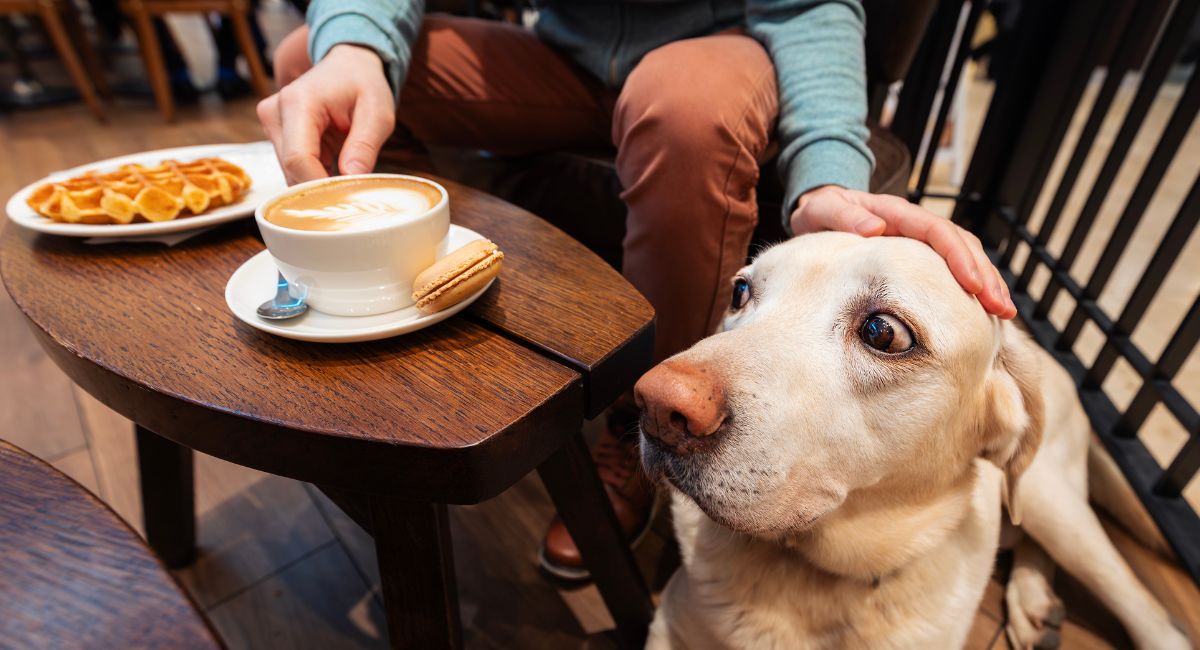
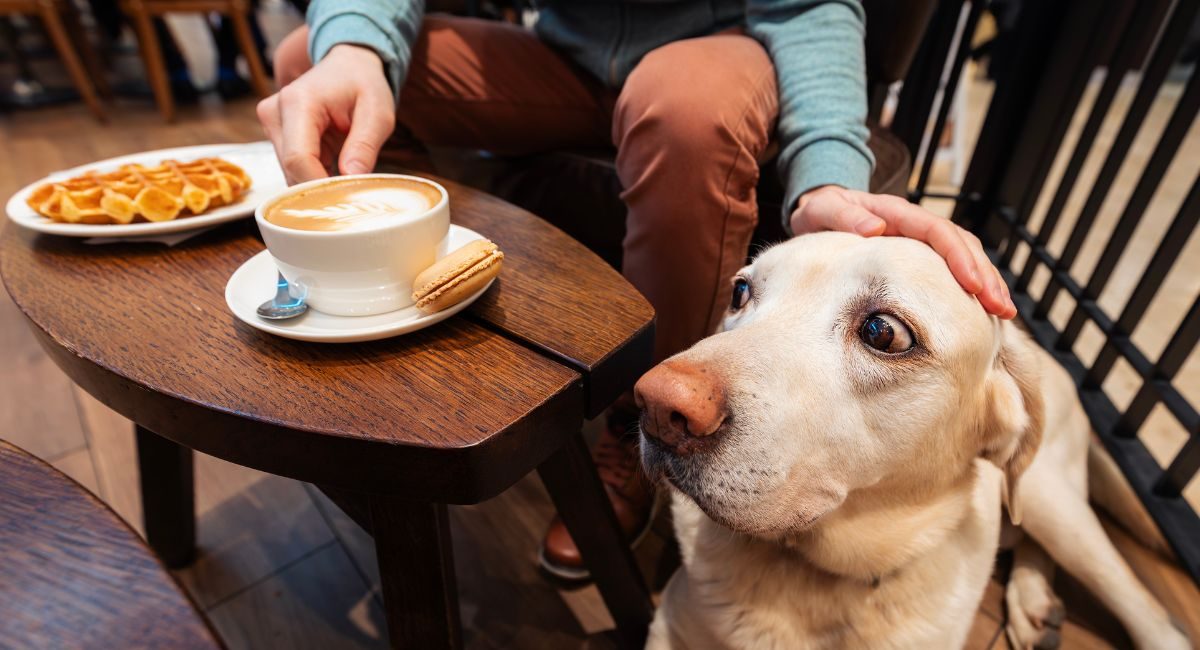
Dog cafés and dog-friendly restaurants may sound similar, but they are not the same. Both involve dogs in public spaces, yet they serve different purposes and follow different rules.
Mixing them up can lead to confusion, especially for people looking to dine with their own dogs.
Knowing the difference helps set the right expectations.
A dog café often focuses on spending time with dogs that belong to the business, while a dog-friendly restaurant allows guests to bring their own dogs, usually in outdoor seating areas.
This article explains how each works and why the distinction matters when choosing where to go.
What Is a Dog Café?

A dog café is a business where customers visit mainly to spend time with dogs. In most cases, the dogs are owned and cared for by the café, not by the visitors.
People usually pay an entry fee or book a time slot to interact with the dogs in a controlled space.
Food and drinks may be available, but they are often a secondary feature. Many dog cafés focus on relaxation, social interaction, or stress relief rather than dining.
Staff members supervise the dogs to ensure their safety and well-being, and rules are in place to limit crowding and overstimulation.
Dog cafés are more common in some countries than others. In the United States, they often operate under special licenses or separate food preparation areas to meet health regulations.
Visitors should not expect to bring their own dogs unless the café clearly allows it, which is less common.
What Is a Dog-Friendly Restaurant?

A dog-friendly restaurant is a place to eat that allows guests to bring their own dogs. In most cases, dogs are only permitted in outdoor areas such as patios or sidewalk seating.
The main focus of the business is food and service, with dogs treated as guests rather than the main attraction.
Rules for dogs at restaurants are usually set by local health codes and city regulations. Because of this, dogs are rarely allowed indoors, except for service animals.
Restaurants may also have their own policies, such as leash requirements or limits on the number of dogs per table.
Unlike dog cafés, dog-friendly restaurants do not provide dogs for customers to interact with.
The experience is similar to dining anywhere else, with the added benefit of being able to keep your dog with you while you eat.
Key Differences at a Glance
While dog cafés and dog-friendly restaurants both involve dogs, the experience they offer is very different.
The table below highlights the main differences so readers can quickly see how each type of business works.
| Feature | Dog Café | Dog-Friendly Restaurant |
| Who the dogs belong to | The business | The guests |
| Main purpose | Spending time with dogs | Dining |
| Where dogs are allowed | Usually indoors | Usually outdoor seating only |
| Entry or cover fee | Often required | Not required |
| Food and drinks | Secondary to dog interaction | Primary focus |
| Common rules | Time limits, staff supervision | Leashes, table limits, patio rules |
These differences explain why people sometimes feel confused when visiting a place labeled as a “dog café.” Knowing what each term means makes it easier to choose the right experience.
Why the Difference Matters for Dog Owners
Many people search for places where they can eat with their dog and expect a restaurant setting. When they arrive at a dog café instead, they may learn that outside dogs are not allowed.
The opposite can also happen. Some visitors look for a social space focused on dogs and end up at a restaurant that only allows pets on an outdoor patio. This can feel limiting if they expected a more interactive experience.
Knowing the difference makes planning easier.
Dog owners can choose a setting that fits their goal, whether that is enjoying a meal with their dog nearby or spending time in a space designed mainly for dog interaction.
Legal and Health Code Considerations
Dog cafés and dog-friendly restaurants follow different rules because of health and safety laws.
In many parts of the United States, health codes do not allow pets inside areas where food is prepared or served. This is why most restaurants only allow dogs in outdoor seating areas.
Dog cafés often operate under special permits or use separate spaces to meet these rules. Some have no on-site food preparation, while others keep dog areas completely separate from kitchens.
Local laws can vary by city and state, so policies may look different from one place to another.
Service animals are treated differently under the law. They are allowed in most public indoor spaces, including restaurants.
Regular pets, however, must follow local regulations and the business’s own rules.
Which One Should You Choose?
The right choice depends on what kind of experience you want. If your goal is to relax and spend time around dogs, a dog café may be the better fit.
These spaces are designed for interaction, observation, and social time with dogs, often in a calm and controlled setting.
If you want to enjoy a meal without leaving your dog at home, a dog-friendly restaurant is usually the better option.
These restaurants let you dine while your dog stays with you, most often on an outdoor patio.
The focus remains on food and service, with dogs simply welcomed as companions.
Frequently Asked Questions (FAQs)
What are the rules at a dog cafe?
Rules at a dog café focus on safety, hygiene, and dog welfare. Visitors may need to book time slots, pay an entry fee, and follow posted behavior guidelines. Many cafés limit the number of guests, require hand washing before entry, and restrict certain actions like feeding or picking up dogs. Outside dogs are often not allowed unless clearly stated.
What is the purpose of a dog cafe?
The purpose of a dog café is to give people a place to relax and spend time around dogs. These cafés often provide a calm, social environment where visitors can interact with dogs owned by the business. Some dog cafés also support adoption efforts by partnering with shelters, helping dogs socialize while giving people a low-pressure way to meet them.
What’s the etiquette for bringing a dog to a cafe?
Etiquette depends on the type of café. Most dog cafés do not allow outside dogs, so visitors should check policies in advance. For cafés or restaurants that allow personal dogs, pets should be well-behaved, leashed, and comfortable around people and other animals. Owners are expected to clean up after their dogs and follow staff instructions at all times.
Are there any risks associated with dog cafes?
Dog cafés can pose risks if dogs become stressed, overstimulated, or exposed to illness. Close contact between dogs and people increases the chance of bites, scratches, or the spread of germs if rules are not followed. Reputable dog cafés manage these risks through supervision, limited capacity, health checks, and clear guidelines to protect both visitors and animals.
Wrapping it Up
Dog cafés and dog-friendly restaurants may both include dogs, but they serve very different purposes.
A dog café centers on interaction with dogs, while a dog-friendly restaurant focuses on dining with pets nearby.
Knowing the difference helps dog owners choose the right experience and avoid confusion.
By understanding the rules, etiquette, and expectations of each, visitors can plan ahead and enjoy a space that truly fits their needs.
Article Sources
1. American Kennel Club article
Patterdale, S. (2025, November 12). Is your dog ready to go to a restaurant? American Kennel Club.https://www.akc.org/expert-advice/training/dog-ready-for-restaurant/
2. U.S. Food & Drug Administration Food Code
U.S. Food and Drug Administration. (2025). FDA Food Code. U.S. Department of Health and Human Services. https://www.fda.gov/food/retail-food-protection/fda-food-code
3. ASPCA Pet Health Insurance article
M. (n.d.). How to socialize your dog. ASPCA Pet Health Insurance.https://www.aspcapetinsurance.com/resources/how-to-socialize-your-dog